


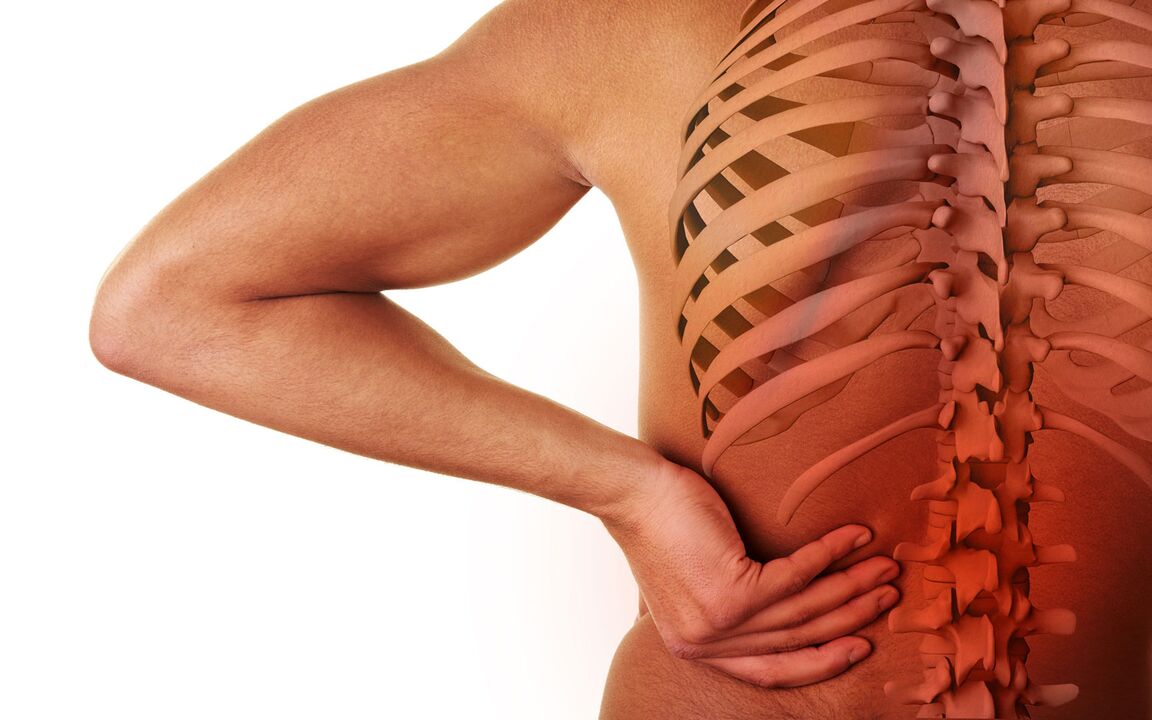
Osteochondrosis is a dangerous chronic disease.Risk category: people over 40 years old.But the disease can manifest itself earlier.Recently, the first signs of osteochondrosis are observed at the age of 20-30.There are cases of earlier manifestations of the disease.
How does osteochondrosis develop?
Depending on individual development, the human spine consists of 33-34 vertebrae.The special structure (S shape, separation of the vertebrae by intervertebral discs) makes the spine flexible and able to take different positions.The spine is connected by intervertebral discs (21-25 pieces).At the center of the disc is a semi-liquid core.It is surrounded by a fibrous ring.Cartilaginous end plates are located above and below the disc.
Metabolic processes are disrupted as the disease progresses.As a result of poor blood circulation, the intervertebral discs dry out.This is the first stage of the disease.With the further development of the pathology, the fibrous ring cannot cope with the total load and is deformed.Then it can rupture and form an intervertebral hernia.As a result, the mobility of the spine decreases, disc displacement may occur.
Causes of osteochondrosis
The spine needs a constant average load to function properly.Severe overexertion or improper pressure distribution can cause significant damage to the spine.The causes of the development of osteochondrosis can be divided into external and internal.
Internal causes of the disease:
- genetic predisposition;
- disturbance of metabolic processes in the body;
- overweight, obesity;
- age-related changes;
- poor posture, curvature of the spine;
- straight legs.
External factors include:
- sedentary lifestyle;
- sudden movements with large amplitude;
- incorrect body position when carrying and lifting heavy objects;
- high load on the spine when playing sports or in a certain type of activity;
- damage to any part of the spine;
- improper sleeping position, including sleeping on a soft mattress and high pillow;
- walking in high heels;
- smoking;
- vibration effects on the body, for example, drivers of heavy equipment;
- hypothermia.
Active sports do not always help the health of the spine.The disease often develops due to excessive training in gymnasts and weightlifters.Certain professions are at risk - loaders and builders.
Types of osteochondrosis
Depending on which part of the spine is affected, osteochondrosis is divided into the following types:
- Osteochondrosis of the lumbar region.The most common pathology.The reason is serious stress in the sacrum and lumbar region.
- Osteochondrosis of the cervical spine.It develops due to improper load on the cervical spine.Blood circulation to the brain and the activity of the thyroid gland are disturbed.
- Osteochondrosis of the thoracic region.Not as common as the first two.In the thoracic region, the discs are not so active, the muscle corset is stronger.It is difficult to diagnose because the symptoms are more similar to heart disease.
- General osteochondrosis.In this case, the pathology affects not one part of the spine, but several at the same time.
Symptoms of osteochondrosis
Depending on which part of the spine the disease is localized, different symptoms of osteochondrosis are observed.
In the case of lumbar osteochondrosis, the patient observes the following symptoms of the disease:
- various types of pain in the lumbar region;
- piercing pain spreading to legs and hips;
- movement disorders.Changing body position, bending or turning causes severe pain in the lower back.Therefore, a person tries to maintain the same posture;
- loss of feeling in the legs.This happens due to compressed roots and nerve endings.
The main symptoms of cervical spine pathology:
- neck pain, especially in the evening;
- creaking when moving the neck;
- headache, especially in the back of the head;
- pain in the shoulders and chest, numbness;
- visual impairment;
- noise, ringing in the ears, feeling of fullness;
- dizziness with sudden changes in the position of the neck.
The main symptoms of thoracic osteochondrosis:
- thoracic neuralgia, pain in the heart;
- pressing pain in the upper thoracic region;
- difficulty breathing;
- back and chest reflex tension;
- feeling of coldness in the upper extremities, periodic numbness starting from the shoulders and ending in the fingers;
- increased pain at night;
- hypothermia and increased discomfort during physical activity.
Stages of osteochondrosis
In the initial stage, there is a loss of elasticity of the intervertebral discs.They shrink and bulge.After sleep, the patient does not feel much discomfort, except for a slight stiffness of the spine.
The transition to the next stage is indicated by the appearance of pain.Destruction of the discs continues, the fibrous ring is deformed and cracks.There is stiffness in movements and sharp pain when changing the usual position.
With the development of the third stage, the fibrous ring breaks.Gelatin ingredients come out.An intervertebral hernia is formed.If you do not start treatment at this stage, compressed roots and disability occur.
Complications of osteochondrosis
Lack of treatment for osteochondrosis leads to various complications - radiculitis, protrusion.The most dangerous is the formation of an intervertebral hernia, which can cause paralysis of the lower limbs or other parts of the body by compressing the nerve endings.
Further destruction of the spine can lead to the development of vegetative-vascular dystonia and increased blood pressure.Patients with osteochondrosis have a risk of heart attack and stroke.
Osteochondrosis is an insidious disease that causes serious consequences for the whole body: heart, stomach and intestinal diseases, development of intercostal neuralgia.
Osteochondrosis of any part is dangerous.Lumbar can cause diseases of the pelvic organs that will affect a person's reproductive abilities.Inflammation of the sciatic nerve develops.
A herniated disc leads to compression of blood vessels.As a result, general blood circulation is disturbed.The most dangerous point is compression of the vertebral artery.
Methods of diagnosis of osteochondrosis
Experts identify osteochondrosis at an early stage using the following diagnostic methods:
- MRI.Magnetic resonance imaging
- Ultrasound examination (ultrasound)
- Electrocardiogram (ECG)
- Laboratory research
Treatment of osteochondrosis
It is better to treat osteochondrosis in a specialized clinic under the supervision of specialists.Currently, both conservative and surgical methods are used for the treatment of osteochondrosis.
Each patient undergoes individual treatment.When choosing a treatment regimen, the doctor takes into account the part of the spine where the pathology develops, the age of the patient, the presence of other concomitant diseases, etc., and the degree of destruction of the intervertebral discs.Procedures are carried out 2-3 times a week.After the first 7 days of treatment, the pain syndrome is blocked.A standard therapy course consists of the following procedures:
- Resonance wave UHF therapy.Resonance wave therapy is a method of therapeutic effect on the water environment of the body with low-intensity, high-frequency electromagnetic waves.
- Injections of chondroprotectors.Intra-articular injections are an effective method of treating various diseases of the musculoskeletal system by introducing a drug (chondroprotector) into the affected joint.
- Rehabilitation in special simulators.Treatment of the spine and joints with the help of a simulator will restore the mobility of the limbs in a short time without expensive treatment in specialized sanatoriums.
- Blockage of joints and spine.Joint blockade is a type of drug treatment of the spine and joints aimed at relieving acute pain, inflammation and muscle spasms.
- Drug treatment.Drug treatment of joints and spine is used in a wide range and in combination with physiotherapy.Intra-articular injections, blockades and drops.
Treatment of osteochondrosis helps to achieve the following
- allows to relieve pain and neutralize inflammation;
- improves nutrition of intervertebral discs;
- stops the destruction of disks, restores their structure;
- releases compressed nerve roots;
- relaxes tense muscles;
- restores flexibility to the spine;
- prevents the appearance of protrusions and tears;
- normalizes blood pressure;
- straightens and strengthens the muscle corset;
- corrects posture;
- normalizes metabolism.
After completing the therapy course, the doctor gives the patient a manual with a set of exercises to be performed independently at home.The specialist will explain in detail how to change your usual lifestyle to prevent the disease from returning.
Prevention
Follow these rules to have a healthy spine:
- swimming, yoga, jogging, fitness;
- Keep your back straight and your shoulders relaxed while sitting at the computer or desk;
- choose chairs and armchairs that support the spine;
- take a break from work every 2 hours or more, walk, bend your head and body in different directions;
- when lifting weights, keep your back straight, do not squat and make sudden jumps;
- do not carry heavy objects in front of you;
- when training on a new simulator, ask the trainer how to properly train on it;
- choose shoes with shock-absorbing soles for sports;
- sleeping on an orthopedic mattress;
- do abdominal exercises.
Nutrition for osteochondrosis
For osteochondrosis, it is recommended to eat 6 times a day in small portions.Follow these principles in your diet:
- include dairy products and lean meat in your diet - beef, rabbit, chicken;
- limit the consumption of grapes, legumes, peas, beans, meat broths;
- eating jelly, jellied meat, jellied fish.With their help, you get chondroprotectors - substances involved in the synthesis of cartilage tissue;
- drink at least 1.5 liters of water per day;
- eat fresh fruits and vegetables: cucumbers, tomatoes, carrots, onions, beets, cabbage, peppers, broccoli, celery;
- prefer baked or steamed food;
- eat sunflower seeds, nuts, avocado and raw spinach;
- sprinkle the salad with olive oil;
- preparing dishes from lobster, oysters, crabs, mushrooms, cereals;
- try to eat less salty, smoked foods, flour products, sugar and hot spices.